AI Workflow Audit: What It Should Include Before Build Work Starts
A strong AI workflow audit should rank workflows, estimate ROI, assess system fit, and define the first implementation path before build work starts.
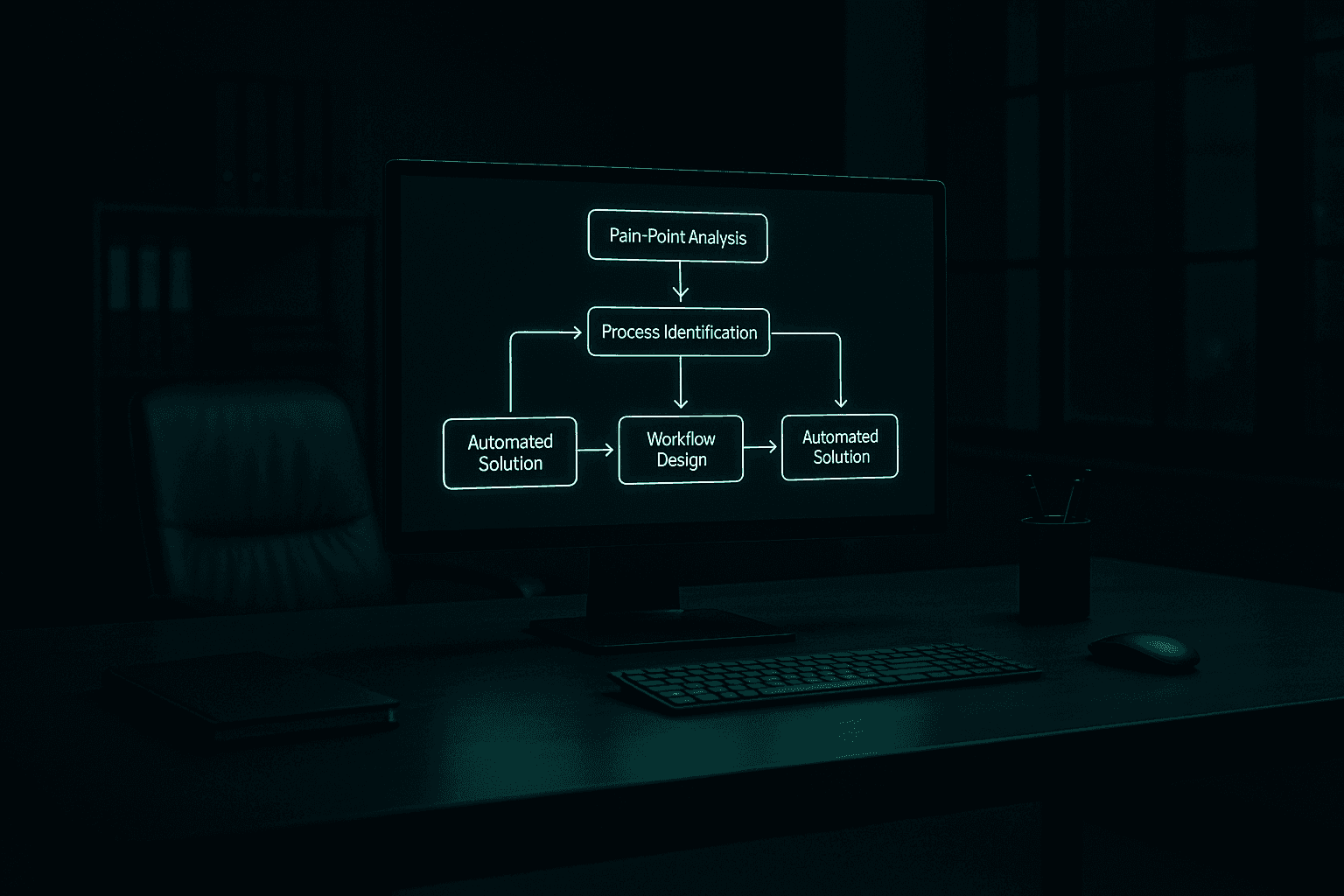
A strong AI workflow audit should do four things before any build work starts: rank your workflows by impact, estimate the likely ROI of each, assess how well your current systems support the change, and define the first implementation path. Anything less is a discovery call with a better label.
Rank workflows before build.
A lot of teams ask for an audit and get a discovery call with a better label. A real AI workflow audit should narrow the field, frame likely payoff, and define the first implementation path.
What an audit should answer
A strong audit should answer four questions:
- Which workflow should go first
- What is the likely operational payoff
- Do current systems support this workflow
- What should the first implementation path look like
The output should make the next decision easier.
What a real audit should include
Workflow mapping
The team should map how work moves through the business:
- who touches the process
- which systems are involved
- where manual steps happen
- where delays occur
- where exceptions pile up
- where rework happens
Bottleneck identification
Not every workflow deserves priority. The audit should isolate where drag is largest in terms of time, labor cost, delay, throughput loss, error exposure, or client friction.
ROI framing
A strong audit should estimate likely payoff. Useful outputs include:
- hours saved
- processing time reduction
- throughput gains
- delays removed
- admin effort reduced
System fit assessment
A workflow may look attractive on paper and still be weak in practice if systems are inaccessible or fragmented. The audit should review system access, likely integration friction, and launch readiness.
Adoption considerations
A workflow is a weak first target if users are unlikely to adopt it. The audit should review ownership, user pain, workflow fit, and organizational support.
A ranked recommendation
The audit should end with a recommendation. Not a workshop summary. Not ten equal options. A point of view.
What weak audits miss
Weak audits often:
- stay too high level
- fail to rank options
- skip system reality
- ignore adoption
- stop before implementation logic starts
This is how teams pay for discovery twice.
How an audit should feed implementation
The best audits shorten the path to execution by defining:
- the workflow
- the metric
- rough ROI
- system fit
- rollout path
This is why a workflow audit should sit naturally ahead of:
The best next step
If the team is still debating what AI should target first, do not start building anyway.
Run an audit forcing prioritization and defining the first implementation path with clarity.
If you want this clarity, start with the AI Workflow Audit.
Get the weekly AI brief.
Read by CIOs and ops leaders. One insight per week.
Related reading
- AI Automation Consulting: Where ROI Shows Up FirstAI automation consulting works best when it starts with repetitive workflows with visible cost. See where ROI shows up first and how to choose the first process.
- AI Implementation Consultant Chicago: What 90 Days Should ProduceAI implementation consultant Chicago buyers trust. See what the first 90 days should produce, where projects fail, and how to pick the first workflow with clear payoff.
- AI Strategy Consulting vs AI Implementation: Which Step Comes FirstAI strategy consulting fits teams with unclear priorities. AI implementation fits teams with one clear workflow. See how to choose the stronger next step.